01
Execution layer
Collect, monitor, organize, and apply a consistent process across a large research universe.
- Recurring research
- Persistent records
- Agent coordination
Field-tested enterprise AI
Practical thinking on how organizations divide work among automation, independent review, and human judgment—without mistaking activity for progress.
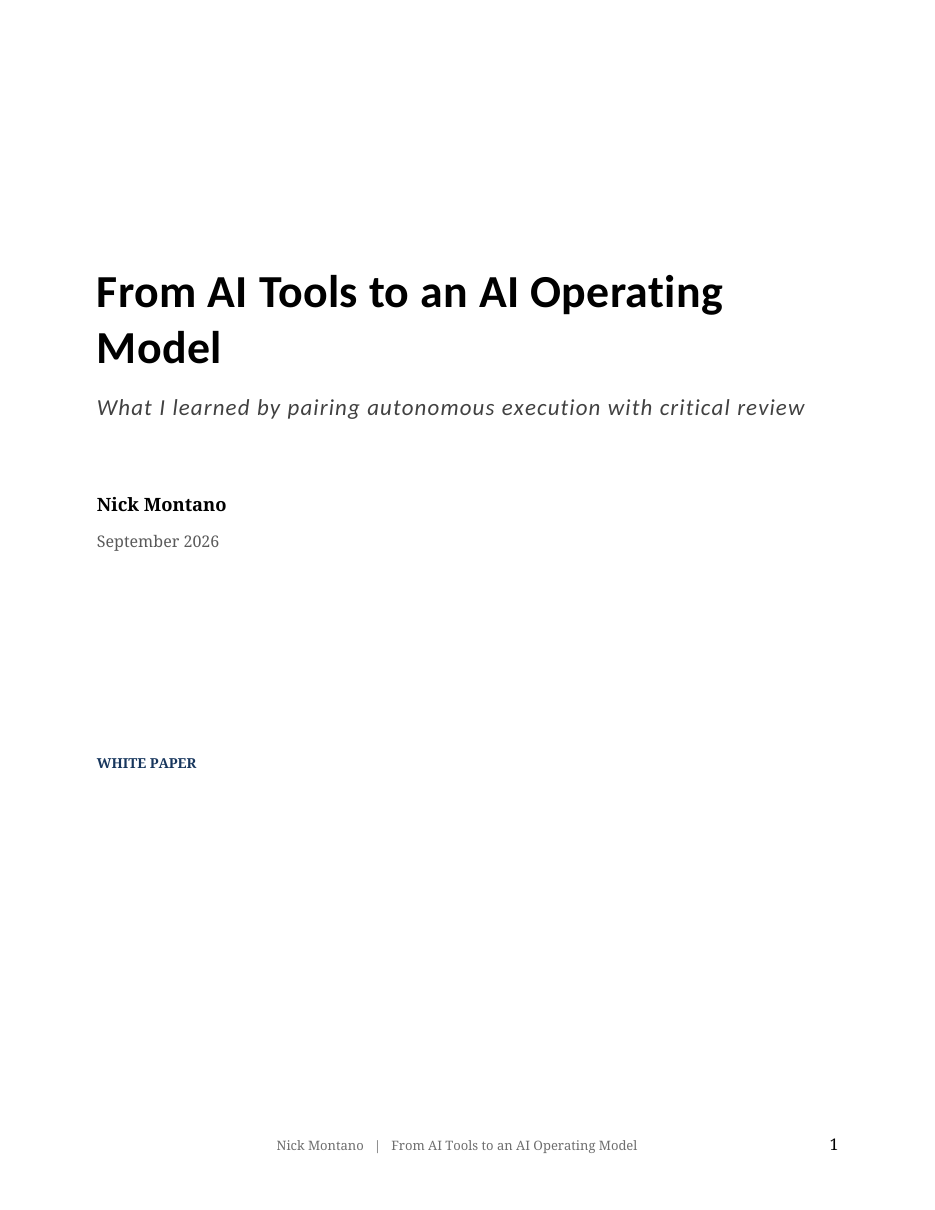
Featured field paper
How I use Pokee AI and ChatGPT together across enterprise account research, personalized outreach, editorial work, and multi-agent analysis.
Assign each system a default responsibility instead of asking every tool the same question.
Make independent review capable of rejecting the premise—not merely polishing the answer.
Treat “pass,” “monitor,” and “research required” as legitimate outcomes.
A deliberate division of labor
Capability overlap is not a reason to blur ownership. The advantage comes from clear roles, deliberate handoffs, and meaningful stop conditions.
Collect, monitor, organize, and apply a consistent process across a large research universe.
Test assumptions, distinguish evidence from inference, and determine whether the recommendation follows.
Define the objective, resolve ambiguity, set risk tolerance, and approve consequential action.
Selected insights
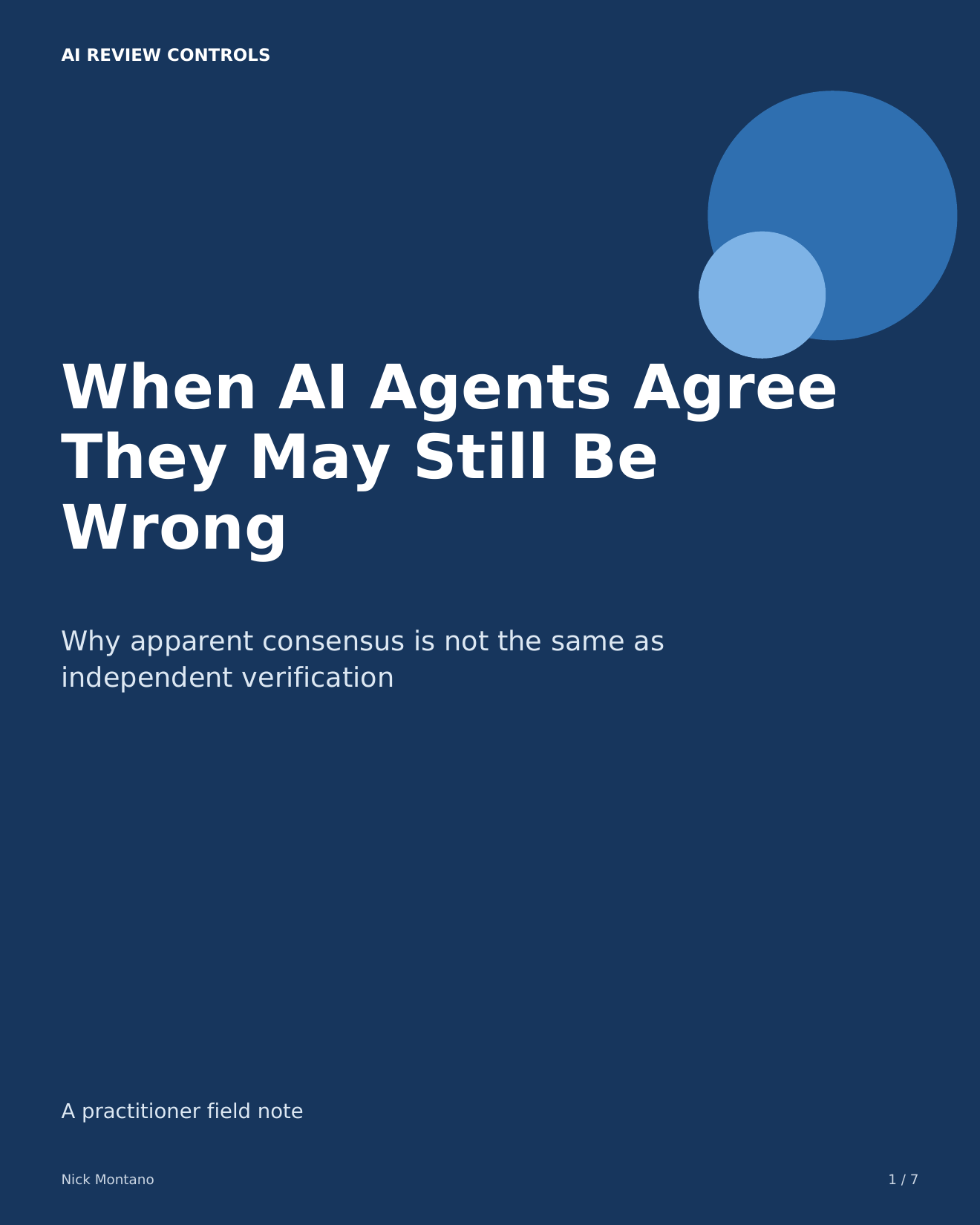
Apparent consensus is not independent verification when multiple agents rely on the same underlying source.
Read the visual field note“One of the most important outputs an AI system can produce is no action.”
A workflow forced to recommend something will eventually manufacture confidence.
About Nick Montano
I’m an enterprise sales and business development leader with more than 15 years of experience in legal technology. My work sits at the intersection of eDiscovery, legal hold, information governance, revenue intelligence, and applied AI.
I use AI systems to monitor complex markets, improve account research, challenge operating assumptions, and turn evidence into clearer decisions. Montano AI is where I document the practices, controls, and lessons that emerge from that work.
The views expressed here are my own and do not necessarily reflect those of my employer.
Connect on LinkedInThe starting point